Showing posts with label Scotland. Show all posts

Sunday, May 20, 2012

Argentina is a Tier One Regional Model


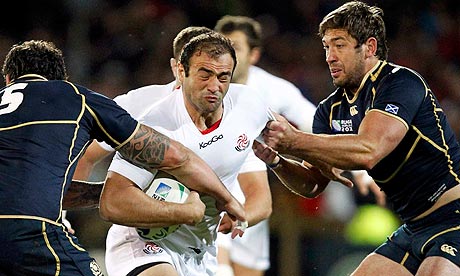
Scotland 15-6 Georgia, RWC 2011
Close game yet a rare fixture
In rugby international competition is divided into three categories. Known as tiers they are used to establish a basis for present and future ability, setting a platform for sides to know where they lie and just how much work they need to do to advance to a superior tier and also not fall down to an inferior tier. The IRB World Rankings has ninety-six nations but the top two tiers account for only the top eighteen sides. Of the sides considered as being the Top Two Tiers all except Georgia have competed at every Rugby World Cup since it was expanded from sixteen to twenty teams in 1999. The First Tier consists of ten sides - Australia, Argentina, England, France, Ireland, Italy,  New Zealand, Scotland, South Africa and Wales. The same teams account for all places in the Six Nations Championship and The Rugby Championship. The Second Tier consists of eight sides - Canada, Fiji, Georgia, Japan, Romania, Samoa, Tonga and the United States of America. In New Zealand 2011 these eighteen sides were joined by Namibia and Russia. As expected, no Tier Two side made the Quarter Finals of the tournament and neither Namibia nor Russia won a match which goes to show the tiers´ are a good reflection of the global rugby order. 

Despite the tiers not being geographically organized at all the IRB and Rugby World Cup Limited operate on a regional structure which in the case of  Namibia, for instance, has seen the African nation qualify for the past four World Cup´s, despite never having come close to winning a World Cup match. Namibia, a Tier Three nation, has been Africa´s best for the past twelve years but has only participated at World Cup´s due to Africa being given a direct qualifying spot. This controversy highlights the failures of the global rugby authorities to create a fair system for all in that African Tier Three sides have a massive advantage over all Tier Three nations from all other regions - Asia, Europe, Oceania and the Americas. While Namibia qualified after defeating no teams from Rugby World Cup 1999, 2003 or 2007 Russia qualified after defeating teams from each of these World Cup´s - Portugal, Romania and Spain. The Europeans happened to also have significantly higher placings in the IRB World Rankings than the sides Namibia played against. 

While Namibia has been the big winner in this, the biggest loser has been South America as it is the only continent which is not allocated World Cup qualification to the team which finishes first in qualification matches. The unjust system has the South American winner face the North American runner up with the winner of that qualifying for the World Cup as Americas 2. This ignores the Tier structure since North America has two sides from the second tier but South America doesn´t have any. Having Uruguay win the South American qualification series and then face Tier two sides while Namibia qualify automatically after only facing tier three sides is unjustifiable and simply odd. Seemingly, Uruguay´s two World Cup wins from seven matches has been entirely discredited. Curiously, the side that Uruguay defeated in Rugby World Cup 2003, Georgia, has gone on to now be a Tier Two side.

Chile vs Brazil, May 2012.
Argentina face both also in May 2012
Despite the IRB not doing good enough for the Americas, Argentina remains a regional leader. There is little to suggest that teams are closing the gap on Argentina. To the contrary, Los Pumas are a permanent tier one side that continues to match it against the best. Without its professional players, Argentina is still far too strong for the others in South America, as demonstrated yesterday with a 40-5 win over Uruguay. Such matches do little for Argentine rugby but are crucial to the growth of the likes of Brazil, Chile and Uruguay. Argentina´s annual participation in the South American Championship (CONSUR A) gives potential Pumas of the future a chance but, more importantly, acts as a measuring stick for Argentina´s opponents, all of which are Tier Three rugby nations. Of the nine other Tier One sides no team plays in an annual  regional competition comparable to the South American Championship. There is no Oceania Cup involving Australia , New Zealand and the three Tier Two sides of Fiji, Samoa and Tonga. Nor is there an African Cup involving South Africa and other teams from the continent. Europe, similarly, has no competition featuring the Six Nations sides and the emerging nations. Last years World Cup saw Scotland defeating Georgia 15-6. The Tier One side failed to score a try. Yet there is no international competition between the sides at all and the match was, amazingly, the first ever between the two nations.

The reason for no regional competitions is not the differing abilities, if it were then World Cup´s would only feature Tier One sides. The First Tier simply have no interest in such matches taking place due to the financial costs involved. Aside from Argentina facing its South American counterparts in the CONSUR A tournament the only comparable example is Asia which has Japan (Tier Two) competiting in the Asian Five Nations which sees the Japanese face the next four best Asian sides - currently Hong Kong, Kazakhstan, South Korea and the United Arab Emirates. Japan is Asia´s only non-Tier Three rugby nation and has competed at every World Cup. When Japan host Rugby World Cup 2019 it will be representing Asia and Argentina stands out as a regional leader for similar reasons. The South American Championship is a key part of developing the global game and it further underlines what Argentina has to offer as a World Cup host.

Friday, May 4, 2012

Fernández Lobbe to start for Toulon

Fernández Lobbe leaves Wellington injured


For the first time since September, Juan Martín Fernández Lobbe willl start a rugby match. The Pumas World Cup exited the tournament early due to a major knee injury suffered in the first half of the crunch pool match against Scotland in Wellington. His rehabiliation was handled correctly to ensure he returned at 100% and he has been used by Toulon on two occassions from the bench in Top 14 matches vs Agen and Castres. His return to face Toulouse is  great timing for both Toulon and Argentina as there is one month to go in the French season and Argentina have a challenging set of matches next month which will see Los Pumas host Italy in San Juan for a one off match before tacking on France in Córdoba and Tucumán.

Fernández Lobbe is the leading contender forthe Pumas captaincy now that Felipe Contepomi is set to retire from international duty. The other player seemingly in the running to lead Los Pumas is Patricio Albacete who will be playing secondrow in this match.

Toulon
15 Lapeyre
14 Palisson
13 Messina
12 Giteau
11 Smith
10 Wilkinson
9 Tillous-Borde
8 Fernández Lobbe
7 Armitage
6 van Niekerk
5 Samson
4 Botha
3 Hayman
2 Bruno
1 Lewis-Roberts

Saturday, March 24, 2012

Rabo Direct Pro 12 - Round 18 Wrap

Edinburgh 15-29 Newport-Gwent Dragons
Edinburgh continue to look like anything other than a Heineken Cup Quarter Finalists, let alone a team hosting a Quarter Final. the Scottish side again had a poor showing in the Pro 12 with Wales´ weakest side having few problmes in completing a good win.Ulises Gamboa was on the bnech for the Scot´s but Esteban Lozada was left out of the match day team.

Leinster 22-23 Ospreys
Top of the table Leinster lost for the first time in 21 matches with the up-and-down Ospreys getting a good win to stay in the Top Four. It was the come back match for Brian O´Driscoll. Former USA age grade player, Hanno Dirksen again started on the right wing for the Welsh region while Canada´s Chauncey O´Toole was left out of the team.

Glasgow Warriors 29-6 Aironi
Another side firmly in the Top Four is Scotland´s Glasgow Warriors who completed an easy win over Italian side, Aironi also on Friday. The USA´s Tommy Seymour scored the first try of the match as he played on the wing for Glasgow. Aironi´s points came from the boot of the Argentine-Italian, Luciano Orquera. Both sides had other players from the Americas with Federico Martín Aramburu playing 62 minutes at inside centre and Argentine-Italian frontrower, Matías Agüero entering from the bench for Aironi.

Benetton Treviso 23-37 Ulster
a late minute try from Ulster robbed Benneton Treviso of another famous victory. The Italians had been leading by 10 points with as many minutes remaining after Argentine flyhalf, Alberto di Bernardo went over for a try in the 29th minute to make it 23-13. But it was to be the luck of the Irish as one last change gave Ulster the win. The Argentine-Italian, Gonzalo García played the full match while three other players from Argentina came on from the bench in the form of Diego Vidal, Ignacio Fernández Rouyet and Gonzalo Padro.

Cardiff Blues 14-26 Scarlets
After letting a great opportunity go begging last weekend vs the Newport-Gwent Dragons, the Cardiff Blues let another go, this time vs the Scarlets. Cardiff are now sitting in seventh position six points outside of the play-off´s zone while both Ulster and the Scarlets are one point behind Glasgow and three behind the Ospreys. 

Connacht 16-20 Munster
The away win sees Irish powerhouses, Munster, move into second position in the standings while Connacht continue to have no chance of advancing at all. Even with a virtual B team Munster was still too strong. The USA born Irish interantional flyhalf,. Ronan O´Gara was amongst the players rested for the encounter.

Leinster vs Ospreys


Rabo Direct Pro 12 Standings
1 Leinster 64
2 Munster 56
3 Ospreys 53
4 Glasgow 51
______________
5 Ulster 50
6 Scarlets 50
7 Cardiff 45
8 Dragons 33
9 Treviso 30
10 Connacht 25
11 Edinburgh 23
12 Aironi 19

Tuesday, March 20, 2012

IRB World Rankings June Implications


Canada celebrate beating Tonga. Could Canada make the Top Ten?
Following the completion of Europe´s premier international competition, the Six Nations the IRB World Rankings of its participants tell a tale of two cities. There is a clear split between the top four and the bottom two. Champions Wales were undefeated and deserved the title but the teams wins over England and France were Ireland were by small margins and all could have been loses. Results against Italy and Scotland were clearer with bigger wins not only from Wales but from the other three teams. It is a continuation of a long term trend in which Scotland have been falling behind while Ireland and Wales have been eliminating the gap between themselves and that of England and Scotland. Italy, in contrast to Scotland, have been improving and the evidence on the international stage as well as within Italian rugby seems to underline the progress of the sport in the country. Scotland, like Italy, are seemingly now a far different prospect at home than in away matches. While the other four are able to perform well home and away.

Could the USA topple Italy in 2012?
The IRB World Rankings have neither Italy nor Scotland in the World´s Top Ten. Both teams are in fact ranked much closer to Canada than they are to Argentina. Canada ranked 13th in the world with Italy and Scotland in 11th and 12th. The points difference sees Canada less than one point behind Scotland and less than two behind Italy. Scotland are more than six points behind Argentina. The European team ranked closed to both Italy and Scotland (besides eachother) is not a Six Nations participant, but rather, Georgia. Similar to Argentina entering The Rugby Championship, Georgia needs to be integrated into the Six Nations. One thing that the current shape of the World Rankings does show is that the June 2012 tours are set up well with Italy to play Argentina in San Juan, the USA in Houston and Canada in Toronto. Scotland will face Australia, Fiji and Samoa. But these tours are not common, rather a rare thing. Scotland will also host Tonga in November, giving it a good chance of rising in rankings. 

Rupeni Caucau vs Scotland in 2003
Should Scotland end the year outside of the Top Ten then Georgia´s case for a place in the Six Nations would be greatly amplified. The matches against Tier Two sides will enable them to pick up IRB Rankings points, especially because the teams they will face are ranked closely. The lowest ranked side that Scotland will face is Fiji in 17th, the same team that ran riot vs the Scot´s at Rugby World Cup 2003 with Rupeni Caucau breaking the line at will. It took the boot of Chris Paterson to rescue Scotland that day. He has now gone to retirement, however, and Scotland´s goalkicking has suffered. Fiji and Samoa will be no easy games for the Scot´s and it could see the Scot´s appear more like a Tier Two than a Tier One side. Italy, in contrast,  have a tough first match in San Juan and then head north to Toronto and Houston. If Italy´s ambition is to be ranked as highly as possible than Jacques Brunel may well opt to field his strongest team in North America, especially given the schedule of facing Canada on Friday evening, having played Argentina on the previous Saturday some 8,380KM away. 

Both Canada and the USA will also play host to Georgia. Any slip ups from either Scotland or Italy would therefore sink the sides lower than their present rankings. Should Canada replicate the form it showed at Rugby World Cup 2011 it could well win all four tests this June. Such a scenario would see the Canadians move towards the Top Ten and if Scotland fail to win in Fiji and Samoa then Canada could be ranked even higher. The USA´s position of 17th could also change greatly. Should the USA Eagles have success in June then it will rise and further put into dispute the IRB´s distribution of qualification places for Rugby World Cup 2015. The USA is ranked behind all of its opponents for the June internationals which means that wins will be more significant for the Eagles than the Canadians. Curiously, the USA is ranked closer to Chile than it is to Canada. This is a sign of the lack of matches the USA has against lower ranked sides. The opposite is true of Namibia, which explains the Africans position in World Rankings.

The World´s Top 25 also features five countries from the Americas. In other words the Americas make up for 20% of the World´s top 25 teams. Three come from South America and two from North America. South America is the only region to not have automatic qualification granted to the winner of its phase of World Cup qualification. Not only does it go against performances at World Cup´s but it also goes against World Rankings. Rather than solving the issue of African participants, other than South Africa struggling, the IRB opted to continue giving Africa an automatic place with Africa one going directly to in Rugby World Cup 2015 while South America 1 will have to face North America 1 and the loser enter repercharge. The IRB, whether intentional or not, continues to fail to address its special treatment of gifting Africa 1 a place at World Cups. Unlike other regions, it is not a system based on merit. Japan, for instance, are clearly a team who should always be at World Cup´s despite not having won many matches. Both the USA and Canada have won more as has Uruguay yet Namibia has played 24 for zero wins, sits behind Spain in World Rankings and does not have a good record against sides from outside of Africa. 

Current IRB World Rankings
1(1)NZLNew Zealand 91.43
2(2)AUSAustralia 87.99
3(3)RSASouth Africa84.34
4(4)ENGEngland83.62
5(5)WALWales83.32
6(6)FRAFrance81.91
7(8) ARGArgentina80.28
8(7) IREIreland79.85
9(9)TGATonga76.63
10(10)SAMSamoa75.81
11(12) ITAItaly74.17
12(11) SCOScotland73.86
13(13)CANCanada72.92
14(14)JPNJapan70.45
15(15)GEOGeorgia70.26
16(16)FJIFiji68.78
17(17)USAUnited States65.63
18(18)ROMRomania63.81
19(19)ESPSpain62.57
20(20)NAMNamibia61.24
21(21)URUUruguay60.47
22(22)RUSRussia60.12
23(23)CHLChile59.52
24(25) BELBelgium 58.88
25(24) PORPortugal57.75

For a complete list of IRB World Rankings click here.