Showing posts with label New Zealand. Show all posts

Sunday, May 20, 2012

Argentina is a Tier One Regional Model


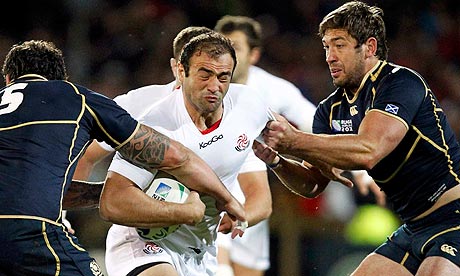
Scotland 15-6 Georgia, RWC 2011
Close game yet a rare fixture
In rugby international competition is divided into three categories. Known as tiers they are used to establish a basis for present and future ability, setting a platform for sides to know where they lie and just how much work they need to do to advance to a superior tier and also not fall down to an inferior tier. The IRB World Rankings has ninety-six nations but the top two tiers account for only the top eighteen sides. Of the sides considered as being the Top Two Tiers all except Georgia have competed at every Rugby World Cup since it was expanded from sixteen to twenty teams in 1999. The First Tier consists of ten sides - Australia, Argentina, England, France, Ireland, Italy,  New Zealand, Scotland, South Africa and Wales. The same teams account for all places in the Six Nations Championship and The Rugby Championship. The Second Tier consists of eight sides - Canada, Fiji, Georgia, Japan, Romania, Samoa, Tonga and the United States of America. In New Zealand 2011 these eighteen sides were joined by Namibia and Russia. As expected, no Tier Two side made the Quarter Finals of the tournament and neither Namibia nor Russia won a match which goes to show the tiers´ are a good reflection of the global rugby order. 

Despite the tiers not being geographically organized at all the IRB and Rugby World Cup Limited operate on a regional structure which in the case of  Namibia, for instance, has seen the African nation qualify for the past four World Cup´s, despite never having come close to winning a World Cup match. Namibia, a Tier Three nation, has been Africa´s best for the past twelve years but has only participated at World Cup´s due to Africa being given a direct qualifying spot. This controversy highlights the failures of the global rugby authorities to create a fair system for all in that African Tier Three sides have a massive advantage over all Tier Three nations from all other regions - Asia, Europe, Oceania and the Americas. While Namibia qualified after defeating no teams from Rugby World Cup 1999, 2003 or 2007 Russia qualified after defeating teams from each of these World Cup´s - Portugal, Romania and Spain. The Europeans happened to also have significantly higher placings in the IRB World Rankings than the sides Namibia played against. 

While Namibia has been the big winner in this, the biggest loser has been South America as it is the only continent which is not allocated World Cup qualification to the team which finishes first in qualification matches. The unjust system has the South American winner face the North American runner up with the winner of that qualifying for the World Cup as Americas 2. This ignores the Tier structure since North America has two sides from the second tier but South America doesn´t have any. Having Uruguay win the South American qualification series and then face Tier two sides while Namibia qualify automatically after only facing tier three sides is unjustifiable and simply odd. Seemingly, Uruguay´s two World Cup wins from seven matches has been entirely discredited. Curiously, the side that Uruguay defeated in Rugby World Cup 2003, Georgia, has gone on to now be a Tier Two side.

Chile vs Brazil, May 2012.
Argentina face both also in May 2012
Despite the IRB not doing good enough for the Americas, Argentina remains a regional leader. There is little to suggest that teams are closing the gap on Argentina. To the contrary, Los Pumas are a permanent tier one side that continues to match it against the best. Without its professional players, Argentina is still far too strong for the others in South America, as demonstrated yesterday with a 40-5 win over Uruguay. Such matches do little for Argentine rugby but are crucial to the growth of the likes of Brazil, Chile and Uruguay. Argentina´s annual participation in the South American Championship (CONSUR A) gives potential Pumas of the future a chance but, more importantly, acts as a measuring stick for Argentina´s opponents, all of which are Tier Three rugby nations. Of the nine other Tier One sides no team plays in an annual  regional competition comparable to the South American Championship. There is no Oceania Cup involving Australia , New Zealand and the three Tier Two sides of Fiji, Samoa and Tonga. Nor is there an African Cup involving South Africa and other teams from the continent. Europe, similarly, has no competition featuring the Six Nations sides and the emerging nations. Last years World Cup saw Scotland defeating Georgia 15-6. The Tier One side failed to score a try. Yet there is no international competition between the sides at all and the match was, amazingly, the first ever between the two nations.

The reason for no regional competitions is not the differing abilities, if it were then World Cup´s would only feature Tier One sides. The First Tier simply have no interest in such matches taking place due to the financial costs involved. Aside from Argentina facing its South American counterparts in the CONSUR A tournament the only comparable example is Asia which has Japan (Tier Two) competiting in the Asian Five Nations which sees the Japanese face the next four best Asian sides - currently Hong Kong, Kazakhstan, South Korea and the United Arab Emirates. Japan is Asia´s only non-Tier Three rugby nation and has competed at every World Cup. When Japan host Rugby World Cup 2019 it will be representing Asia and Argentina stands out as a regional leader for similar reasons. The South American Championship is a key part of developing the global game and it further underlines what Argentina has to offer as a World Cup host.

Wednesday, May 2, 2012

2011 Junior World Championship - Matías Moroni Yellow Card


Sometimes yellow or red cards can have a massive impact on the outcome of a match. But referee´s are not supposed to take this in cosideration when analyzing the punishment for a dangerous tackle. Instead, the tackle needs to be judged only regardless of the situation of the match itself. Welsh captain Sam Warburton was famously send off for a dangerous tip tackle on France´s Vincent Clerc, a decision deemed appropriate from referee´s around the globe. In the same year an Argentine player, outside centre, Matías Moroni was yellow carded without hesitation by Scottish referee Neil Paterson who deemed the tackle on on New Zealand´s inside centre, Rhys Llewellyn to be dangerous.

The tackle took place in just the fourth minute of the first half in what was a match between the Baby Blacks  and Los Pumitas at the 2011 IRB Junior World Championship in Italy. before the yellow card the scores were 0-0 but with Moroni on the sidelines, New Zealand scored a whopping three tries to essentially make it game over at 17-0. A second Pumitas player. To Argentina´s credit no complaint was ever made despite the tackle clearly not being worthy of a yellow card at all. It was not even a penalty offense. It was simply a well executed tackle which got the better of Llewellyn. If anybody was at fault it would be the New Zealander who turned in the tackle while still being drive back. He seemed to be attempting to free his shoulders so that he would be able to set up a ruck to the advantage of his team. The Argentine commentators were beyond belief at the decision of Paterson and unlike the Warburton incident they had good reason to feel anoyed.

Moroni was joined in the centre by Javier Rojas who started for Los Pampas XV this past weekend vs the Sharks XV. 

Wednesday, April 11, 2012

Manuel Carizza slams Jerry Collins


Manuel Carizza Manuel Carizza of Biarritz wins the ball during the Heineken Cup Quarter Final match between Biarritz Olympique and Ospreys at the Estadio Anoeta on April 10, 2010 in San Sebastian, Spain.
Carizza vs Ospreys

With Manuel Carizza potentially on his way to Wales next season to link up with the Llanelli based side, the Scarlets it is relevent to go back to the vault and show a piece of him in action for Biarritz against Welsh side the Ospreys in the Heineken Cup. In 2010 Biarritz took on the Ospreys in what was a Quarter Final in 2010 and took place at the Anoeta Stadium in San Sebastien, Spain.  The 32,000 capacity venue was utilized as a home venue due to the scope of the match. The city is located 20KM from the French border and is the closest sizeable venue to Biarritz. The alterative options of relocating the match to a French venue would mean significantly larger travel times for supporters. San Sebastien is 50km from Biarritz while Bordeaux is 200km and Toulouse 300km from Biarritz. 

The match went down in history as the day that the Welsh Wizard, Shane Williams was out sprinted by the American Rocket, Taku Ngwenya. The USA Eagle´ try being one of the most talked about tries of 2010 as he went 85 metres getting past Williams and Mike Phillips. The match featured World Class players from all corners of the planet. Ngwenya and Carizza were representing the Americas while the Ospreys had former New Zealand backrower, Jerry Collins. The Samoan born All Black played 48 tests from 2001-2007 and started for his team in Rugby World Cup 2003 and 2007.

During his international career Collins earned himself the reputation of being one of the hardest men in test rugby. His tackling was considered the benchmark as his hard hitting style was a combination of brute force and picture perfect techinique. He was also regarded as a great ball carrier, regularly breaking the defensive line  and making plenty of yards around the pitch. Manuel Carizza got the better of him in San Sebastien, Spain however as he completed a low driving tackle on the former All Black, throwing him to ground on top of his colleagues at the previous tackle 

Tuesday, March 27, 2012

Wales vs Canada 1993

The recently crowned Grand Slam Champions of Europe, Wales were one team that was defeated at the hands of Canada in the 1990´s. Canadian rugby was on a high in the latter stages of the days of amateurism and backed up its appearance at the Quarter Finals stage of Rugby World Cup 1991 with some impressive results in the following years. In Rugby World Cup 1991 Canada had impressed in defeating Fiji and Romania and gave France a good match before losing. It was, nevertheless, enough to advance and Canada faced New Zealand in the Quarter Finals, giving the All Blacks a good run for their money. Rugby purists the world over are well aware of Canada´s appearance at the Quarter Finals stage and it is used as a marker to show that Canada is a proud rugby country that has achieved on the greatest stage of them all. 

Al Charron, RWC 2003 Captain
Canada´s biggest accomplishments, possibly of all time, were not in 1991, however. Rather, the year 1993 is one which to this day has been Canada´s finest hour. Canada hosted England while the Lions were touring New Zealand and as such, the RFU requested that the match not be termed an international and had England play under the name of England XV. It was, in effect, a strategy utilized to make it a win-win situation for England. Should England lose they could blame it on the Lions and claim it was just a training match. A win, in contrast, would be a way of saying England´s depth is strong and formidable. The cover that this provided worked out in England´s favor as Canada´s 15-12 win at Burnaby Lake has gone down in history as being a non-international. Latter that year, Canada were not denied a famous win on a techinicality, however as Wales defeated Wales 26-24 in Cardiff thanks to a late try to Al Charron to claim what, to this day, remains Canada´s greatest triumph. The match took place at the venue that has since been upgraded and renamed as the Millenium Stadium. Not only did Canada win in Wales but the home side was unable to score a try with Neil Jenkins´ boot being responsible for all of the Welsh points. 

Gareth Rees, RWC 1995 / 1999 Captain
The following year, Canada continued to impress with the North Americans completing an 18-16 home victory in Nepean over France with IRB Hall of Famer, Gareth Rees kicking the Canadians to victory. During this period, Canada was also significantly better than its North American counterpart, the USA with Canada regularly winning the matches and doing so by comfortable margins. Canada was also too strong for Japan and completed a good 22-10 win over Fiji in Nadi in 1995. Being drawn with both Australia and South Africa at Rugby World Cup 1995 meant Canada´s chances of advancing to the Quarter Finals were extremely difficult and this proved to be the reality despite Canada giving both teams strong matches. From there things became tougher and tougher for Canada as the advent of professional rugby lifted the level of all teams who exposed their players to professionalism. Canada missed the boat and it has proven to have held back the development of the country´s national team. Fiji, with players involved in Super Rugby and elsewhere completed a 38-22 win over Canada during Rugby World Cup 1999. Canada then went on to  crush Namibia 72-11. Had Canada won vs Fiji it would have advanced in the tournament. 

Monday, March 19, 2012

The Rugby Championship Players to Watch - Leonardo Senatore


It is not often that a player can break clear from the back of a scrum to get passed two All Blacks backrowers,  let alone the pair of captain Richie McCaw and Crusaders teammate Kieran Read but this is what happened to put the name of Leonardo Senatore on the lips of commentators world wide in the World Cup Quarter Final clash at Eden Park last year. Senatore´s run set up the first try of the Quarter Final, and one of the best tries from the knock-out stages of the tournament. It also sent a reminder to the world of the force of Argentine rugby. When Felipe Contepomi slotted the conversion of the try scored by Julio Farías, the tournament favorites were behind on the scoreboard and the crowd was silenced - for the first time in the tournament the All Blacks had a real game on their hands. 

Senatore being tackled vs Georgia
The story of Senatore´s beautiful breakout run is more remarkable than just because of who the opposition were. Senatore had not been groomed as a player likely to feature at Rugby World Cup 2011. He had been a product of the post 2007 era of rebuilding but had been unable to secure a place in the team, or greater squad for Argentina´s home internationals in June and European tours in November from 2008-2010. He made his international debut in May 2008 vs Uruguay and played his second test vs Chile in November of the same year. His next test would come almost three years latter, vs Georgia in Palmerston North for Argentina´s final pool match of the World Cup. One week latter he was starting a World Cup Quarter Final. 

Playing for Los Pampas XV
His selection for Los Pumas in 2011 came as a result of his good form for Los Jaguares in the years from 2008-2011 and his form in the Vodacom Cup winning Los Pampas XV in 2011. Argentina had its share of injuries during this period but Senatore was never the player to get the call up for Los Pumas. Instead it was Alejandro Abadie, Alejandro Campos, Genario Fessia, Alvaro Galindo and Tomás Leonardi joining Juan Manuel Leguizamón and Juan Martín Fernández Lobbe in the backrow from 2008-2010. Despite having been a key player for Los Jaguares it was the 2011 Vodacom Cup that saw his rise to be a favored Pumas backrow option. When Santiago Phelan named Senatore in his World Cup squad it was evident that he was picked specifically as cover for Fernández Lobbe. The inital squad featured six backrowers - Campos, Farías, Fernández Lobbe, Galindo, Leguizamón and Senatore. Two were selected per position with Campos and Farías for 6, Galindo and Leguizamón for 7 and Fernández Lobbe and Senatore for 8. When Fernández Lobbe left the field vs Scotland with a serious knee injury, Senatore´s chance had come. Or had it? Argentina were in a battle to stay in the World Cup and Senatore was on the sidelines watching. Following the try of the World Cup, Senatore would get his chance one week latter. He started vs Georgia and following Argentina´s win the team went on to face New Zealand with Senatore picked at the base of the scrum. 

Toulon signing
Several weeks latter, Senatore was on a plane to France and in talks to play as a medical joker replacement for Fernández Lobbe at Toulon. Upon his arrival, Senatore quickly found his way into Toulon teamsheets and had a good first half in the current French season. Since the return of Joe van Niekerk from injury things have changed for Senatore however, and the club is set to stick to the temporary status of his medical joker contract. Whether he stays in Europe or returns to Argentina is unknown but what is certain is that he was able to have a successful stint with Toulon and did score a good try in the process. Should he return to Argentina he will certainly be signed on a permanent contract as one of the UAR Senior´s. His international future is also not in question with Senatore certain to play for his country in 2012 and likely to be in the starting XV. He could well force an adjustment to the Pumas backrow with Fernández Lobbe moving to 6. 

Week Three: Marcelo Bosch
Week Four: Agustín Creevy
Week Five: Juan Martín Hernández 
Week Six: Martín Bustos Moyano
Week Seven: Leonardo Senatore
Week Eight: Rodrigo Roncero